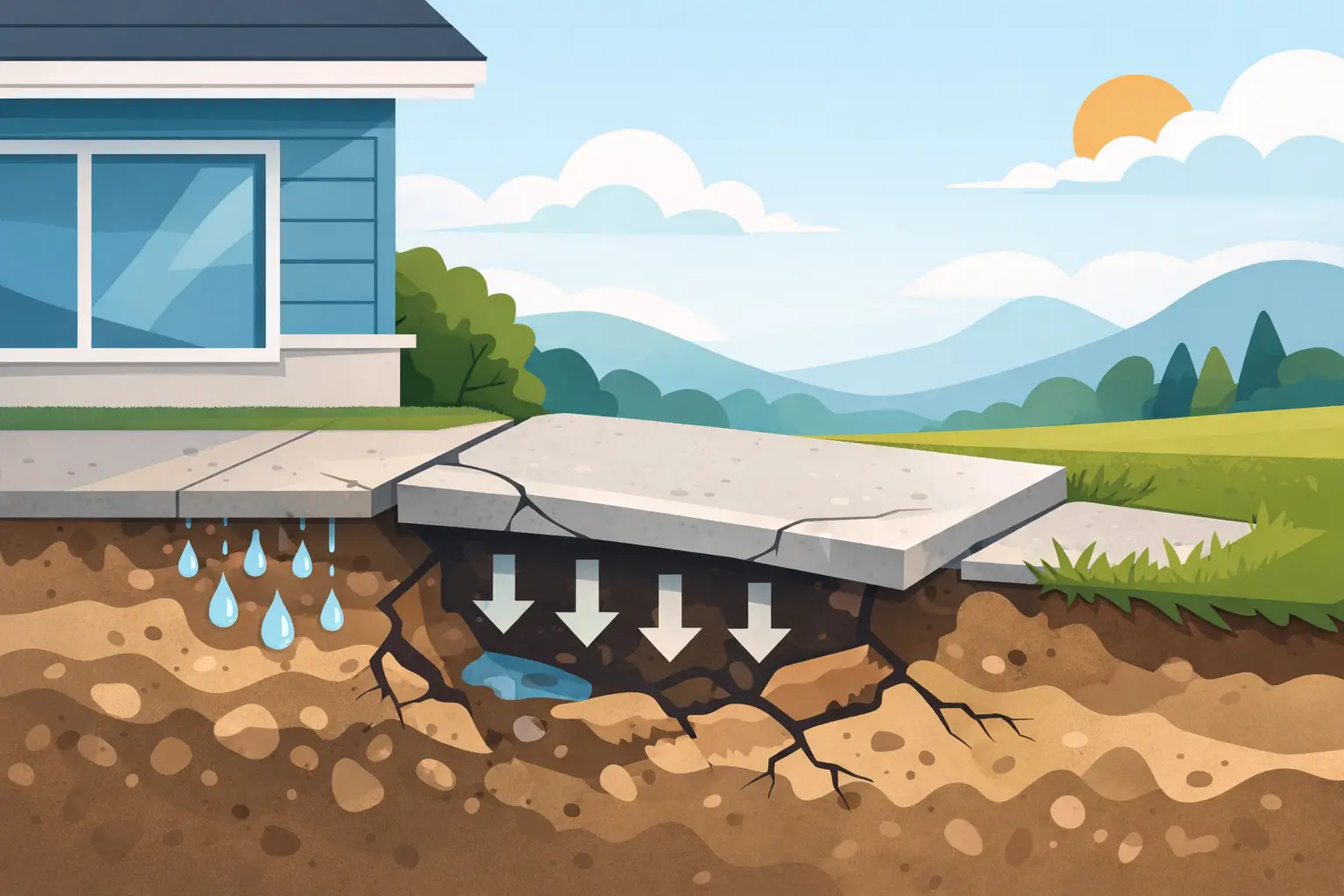
A driveway that held up fine for years can suddenly start pulling away at the garage, collecting water near the apron, or creating a lip at the sidewalk joint. When homeowners ask what causes concrete to sink, the answer is usually not the concrete itself. Most of the time, the slab is reacting to changes underneath it - especially soil movement, moisture problems, or poor support from the start.
That matters because the right fix depends on the reason the slab settled in the first place. A patio that dropped an inch after runoff washed out soil is a different project than a garage floor settling because the base was never compacted properly. If you are trying to decide between leveling, replacement, or a broader drainage correction, the cause is where to start.
What causes concrete to sink under homes and around them?
Concrete is strong in compression, but it still relies on the ground below it. If that support becomes uneven, the slab can crack, tilt, or drop. In Omaha and nearby communities, freeze-thaw cycles, clay-heavy soils, seasonal moisture swings, and drainage issues all play a role.
The common thread is loss of support. Sometimes the soil settles slowly over time. Sometimes water erodes a pocket below the slab. Sometimes the slab was poured over fill that was never compacted enough. The surface problem looks similar in each case, but the repair decision can change depending on which condition is driving it.
Poor soil compaction
One of the most common reasons concrete sinks is poor compaction during original construction. If the soil or fill beneath a driveway, sidewalk, porch, or garage slab was not compacted in lifts, it may settle later under the weight of the slab and daily use.
This kind of settlement often shows up gradually. A section near the garage door may dip lower than the rest of the drive, or a front walk may start leaning toward one side. On newer homes, this can happen when backfilled areas around the foundation continue consolidating after the concrete has already been poured.
Leveling can sometimes correct the symptom, but the long-term result depends on how stable the underlying soils are after lift. If the area is still actively moving, contractors may look more closely at drainage and base conditions before recommending a method.
Water erosion and soil washout
Water is another major cause. Downspouts that discharge near slabs, low spots that hold runoff, leaking hose bibs, poor grading, and concentrated roof drainage can all wash fine soils away over time. When enough material erodes from beneath the slab, voids form and the concrete loses support.
This is especially common around sidewalks, patio edges, drive approaches, and stoops. Homeowners may notice a hollow sound when tapping the concrete, visible gaps under the slab edge, or water disappearing quickly into joints and cracks. Those are signs that the slab may not be fully supported underneath.
If washout is the main issue, lifting the slab without correcting the drainage source can turn into a repeat problem. The slab may be raised successfully, but the same runoff pattern can continue undermining the area.
Expansive and shrinking soils
The soils in this region can expand when wet and shrink when dry. That repeated movement does not always affect every part of a slab evenly. One corner may stay supported while another loses elevation because the moisture content below it changed more dramatically.
This can make settlement look irregular. A patio may slope away from one side, while a sidewalk panel nearby remains mostly level. Seasonal movement also complicates diagnosis because some slabs seem to get worse after wet periods, then appear more stable later.
Not every moving slab is a candidate for simple leveling alone. If soil behavior is a major factor, contractors may want photos, drainage notes, and details about when the movement became noticeable. Those details help separate a one-time settlement problem from an ongoing site condition.
Why concrete sinks in specific areas
The location of the slab often gives clues about the cause. Different surfaces fail for different reasons.
Driveways and garage aprons
These areas take vehicle loads and are often poured near backfilled soil next to the house. If the support near the garage settles, homeowners may see a dip where the driveway meets the slab or a gap forming at the garage floor edge. Water runoff from the roof can make the problem worse if it drains toward the driveway.
When the apron or drive section is lower than the garage floor, the issue may be more than cosmetic. Water can run back toward the garage, and the height difference can become a tire impact point. Leveling often makes sense here, but the cause still matters.
Sidewalks and front walks
Walkways sink when soil support changes below individual panels. Tree roots can contribute in some areas, but more often the issue is compaction loss, washout, or settlement in fill soils near the foundation.
These are the slabs homeowners usually notice first because they create trip hazards. A single lifted or dropped edge may look minor until winter ice or foot traffic turns it into a bigger liability.
Patios and stoops
Patios often settle where drainage is poor or where the slab sits on fill near the rear of the house. Stoops and entry pads can move separately from the structure, especially if they were poured independently and the support beneath them changes over time.
When a patio starts sloping toward the house, the settlement problem and the drainage problem can feed each other. More water collects near the foundation, more soil movement occurs, and the slope can worsen.
What causes concrete to sink faster than expected?
Some slabs sink slowly over many years. Others move noticeably within a shorter window. Faster settlement usually points to active water movement, recent soil disturbance, or support failure under a concentrated area.
For example, a new drainage path from a broken downspout extension can accelerate erosion. A section of soil that was recently trenched for utility work may settle after being backfilled. Heavy runoff between neighboring properties can also create recurring washout along slab edges.
When movement seems sudden, it is worth documenting what changed around the property. New landscaping, gutter discharge changes, buried line repairs, or grading work nearby can all be relevant.
When leveling may work and when it may not
Many sunken slabs can be lifted with mudjacking or foam injection, but not all should be. If the concrete is mostly intact and the issue is settlement from lost support, leveling is often worth evaluating. It can restore grade, reduce trip hazards, and help avoid replacement costs.
If the slab is badly broken, heavily spalled, or part of a larger structural problem, replacement may be the better path. The same goes for situations where drainage is actively undermining the area and has not been corrected. Raising a slab without addressing why it sank can be a short-term fix.
This is where project details matter. Contractors usually need to know the slab type, how much it appears to have dropped, whether water pools nearby, if there are visible voids, and whether access is tight. Photos from a few angles help, especially close-ups of joints, cracks, and the direction the slab is sloping.
A quote-request platform like Omaha Slab Repair can help homeowners organize those details before speaking with local contractors, which tends to produce more useful next steps than a vague request for “concrete repair.”
Signs the cause needs a closer look
Not every sunken slab is an emergency, but some conditions deserve more caution. If a porch slab appears to be affecting attached steps, if the garage floor itself is cracking significantly, or if settlement is happening alongside foundation concerns inside the home, the issue may go beyond standard slab lifting.
The same is true when water consistently moves toward the house, soil gaps keep reopening, or a previously leveled area starts dropping again. Those signs suggest the underlying cause is still active.
For homeowners, the practical next step is not guessing the repair method too early. Start by identifying where the slab has moved, how water behaves during rain, and whether the concrete is still in good enough condition to be lifted.
Concrete usually sinks because the ground below it changed - not because the slab randomly failed. Once you understand whether that change came from compaction, washout, soil movement, or drainage, the repair conversation gets much clearer, and so does the path to a more stable surface.