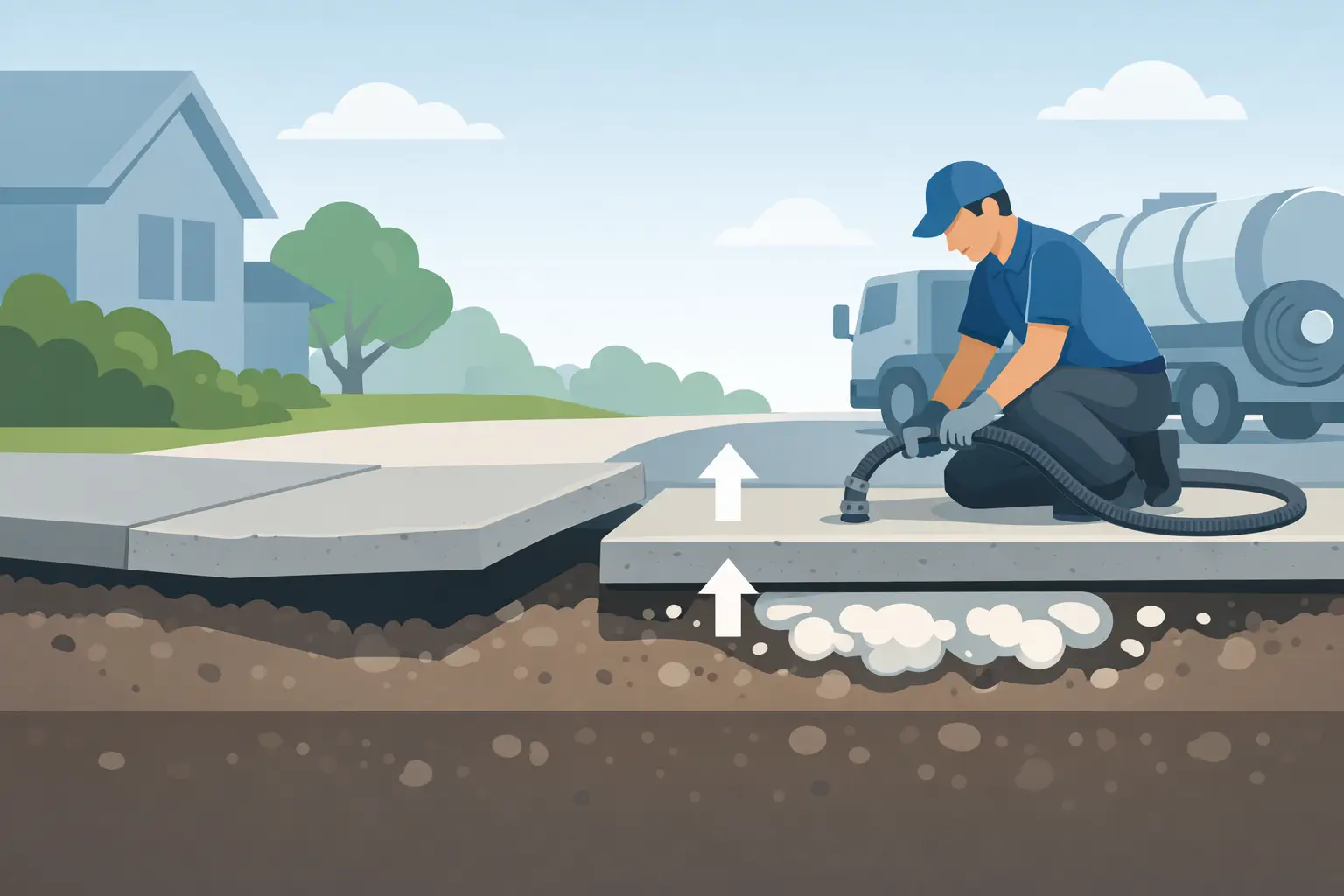
A driveway panel drops an inch, the sidewalk starts catching toes, and suddenly a slab that looked fine last year is now a real problem. If you are asking, can sunken concrete be lifted, the short answer is yes - in many cases it can. But whether it should be lifted depends on why it settled, how badly it moved, and whether the slab is still in good enough condition to save.
For many Omaha-area homeowners, lifting is worth looking at before full replacement. It is often faster, less disruptive, and less expensive than tearing out and pouring new concrete. Still, not every slab is a good candidate, and leveling only works well when the underlying issue has been understood first.
Can sunken concrete be lifted on every surface?
Sunken concrete can often be lifted on driveways, sidewalks, patios, garage floors, porch slabs, and some steps. The basic idea is simple. A contractor drills small holes through the slab and pumps material underneath to fill voids and raise the concrete back toward its original position.
That said, surface type matters. A sidewalk panel with a small drop at one joint is usually a more straightforward leveling job than a cracked garage slab with signs of edge settlement and water intrusion. A patio that has pulled away from the house may also be liftable, but if grading or downspout discharge is still pushing water toward the foundation, lifting alone may not hold up the way a homeowner expects.
The condition of the slab matters just as much as the location. If the concrete is mostly intact, with limited cracking and no major breakage, lifting is often on the table. If it is crumbling, heavily fractured, or has heaved and settled in multiple directions, replacement may be the cleaner answer.
Why concrete sinks in the first place
Concrete does not usually settle for no reason. In eastern Nebraska and western Iowa, movement often comes back to the soil, water, or both.
Poor compaction under the slab is one common cause. If the base was not compacted well when the slab was installed, voids can develop over time and allow the concrete to drop. Water is another major factor. Downspouts that discharge near the slab, improper grading, leaking spigots, or repeated freeze-thaw cycles can wash out support below the concrete.
In some cases, the slab itself is not the main problem. Expansive soil movement, drainage patterns, or erosion near the edge of the house may be contributing to settlement. That is why a lifted slab can look good initially but continue moving later if the water issue was never addressed.
When lifting usually makes sense
Lifting tends to make sense when the slab is structurally decent and the settlement is moderate rather than extreme. A panel that dropped enough to create a trip hazard or allow water to run the wrong way is often a strong candidate.
This is especially true when the goal is to restore function rather than make old concrete look brand new. Leveling can improve safety, drainage, and usability, but it does not erase age, surface wear, or every crack. Homeowners sometimes expect a cosmetic reset. What they usually get is a more even slab that performs better.
Driveways are a good example. If one section near the garage has settled and is causing water to collect or creating a bump where the car rolls in, lifting may correct the height difference without replacing a larger area. The same logic applies to sidewalks with separated joints or patios that pitch back toward the house.
When replacement may be the better call
There are situations where asking can sunken concrete be lifted leads to a fair answer of maybe not. If a slab has broken into multiple loose pieces, has severe spalling, or has sunk because the support below is badly compromised, lifting may not be a lasting fix.
Replacement may also make more sense when drainage correction, base reconstruction, or a layout change is already needed. For example, if a porch slab is sinking while adjacent steps are rotating away from the house, the issue may be larger than a simple height adjustment. If a garage floor has large structural cracks and obvious soil washout below one side, lifting alone could be too limited.
There is also the question of expectations. If a homeowner wants a completely fresh appearance, matching finish, and no visible prior wear, replacement may align better with that goal. Leveling is a repair approach, not a reset button.
The main lifting methods homeowners hear about
Most homeowners comparing options will hear about mudjacking and foam lifting. Both methods aim to raise settled concrete, but the material and application differ.
Mudjacking uses a slurry-type material pumped under the slab to fill empty space and lift the concrete. It has been used for a long time and can work well on many residential slabs. Foam lifting uses expanding polyurethane foam injected beneath the concrete. It is lighter than traditional slurry and is often chosen where a contractor wants controlled lift with smaller drill holes.
Which method is better depends on the slab, access, budget, and contractor preference. There is no honest one-size-fits-all answer. Some projects are well suited to either method. Others lean one direction based on slab thickness, amount of settlement, moisture conditions, or the need for precision near structures.
What lifting can and cannot fix
Lifting can restore elevation, reduce trip hazards, and improve drainage when the slab has simply lost support below. It can often close gaps at joints or at least reduce them. It may also help stabilize a slab enough to avoid replacement for years.
What it cannot do is solve every problem attached to settlement. It will not reverse serious concrete deterioration. It will not permanently defeat poor drainage if water continues undermining the base. It also will not turn a badly cracked slab into a single flawless surface.
That distinction matters because homeowners often evaluate repair success differently than contractors do. A contractor may view a project as successful because the slab is safer and draining properly again. A homeowner may still focus on the visible crack that remains. Both perspectives are reasonable, but they are not the same.
What Omaha-area homeowners should check before requesting quotes
The more clearly you can describe the problem, the better the next conversation tends to go. Before reaching out for pricing, it helps to know what surface is affected, how much settlement is visible, where water goes during rain, and whether cracks have widened over time.
Photos are especially useful when they show the slab in relation to the house, garage, steps, or neighboring panels. It also helps to note whether the issue affects drainage, vehicle clearance, or walking safety. A contractor looking at a patio corner that settled half an inch may assess it very differently if you also mention that water now runs toward the foundation.
Access matters too. A slab behind a fence gate, next to landscaping, or tight against a garage wall can affect how a repair is approached. If there are signs of erosion, standing water, or gutter discharge near the area, include that information. Those details help narrow down whether leveling is likely to work well or whether broader correction may be needed.
For homeowners in Omaha, Council Bluffs, Blair, Glenwood, or Springfield, this is where a quote-connection resource like Omaha Slab Repair can be useful. The goal is not to sell a repair method on the spot. It is to organize the job details contractors usually need so the next step is more informed.
Cost depends on more than slab size
Homeowners often want a quick number, but lifting costs vary for reasons that are not always obvious. Size matters, but so do slab thickness, amount of settlement, ease of access, and whether the problem involves one panel or a more complex section with multiple trouble spots.
The cause of settlement can also affect cost. A simple void-filling and lift on a sidewalk is different from a driveway apron near the street or a garage slab edge that may need careful height correction. If drainage changes are recommended alongside lifting, that is another part of the decision.
The cheapest quote is not automatically the best one if it ignores why the slab moved. A more useful comparison looks at method, expected result, limitations, and whether the contractor sees signs that replacement should at least be discussed.
If you are still asking can sunken concrete be lifted, think of it this way: many slabs can be raised successfully, but the best repair is the one that matches the condition of the concrete and the reason it settled. A careful review now usually saves frustration later, especially when the real problem is water, erosion, or slab damage that lifting alone cannot fully solve.
A good next step is not guessing from a distance. It is documenting what you see, noting where the water goes, and getting the slab evaluated with enough detail to choose between leveling and replacement with confidence.