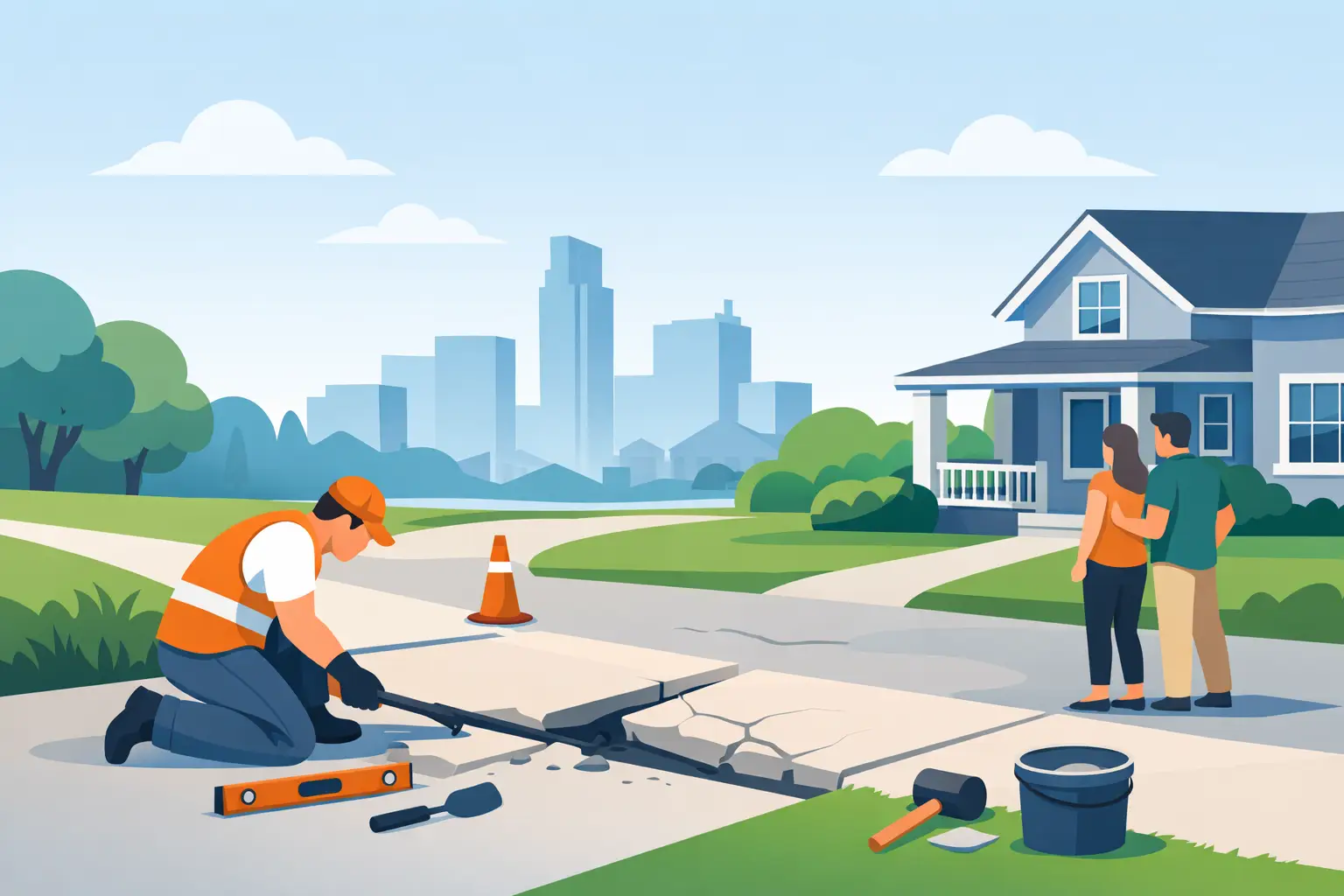
A sidewalk slab that sits even 1 inch higher than the next one can turn a normal walkway into a trip hazard, a drainage problem, and a headache when you are trying to sell or maintain your home. For uneven sidewalk repair Omaha homeowners usually want the same thing - fix the hazard quickly, avoid unnecessary replacement, and understand whether leveling will actually hold up.
That starts with the right diagnosis. Sidewalk settlement is common around Omaha because soil movement, water, freeze-thaw cycles, and long-term compaction can all shift concrete over time. But not every uneven sidewalk should be lifted, and not every crack means replacement is required. The useful question is not just how bad it looks. It is why it moved and whether that cause is still active.
What causes uneven sidewalk repair in Omaha cases?
Most uneven sidewalks do not fail randomly. One slab loses support below it, drops, tilts, or separates from the next section, and the height difference becomes obvious. Sometimes it happens gradually over years. Sometimes one wet season makes the problem much more visible.
In Omaha-area neighborhoods, a few conditions show up often. Water runoff is a major one. If downspouts discharge near the walk, if the yard slopes poorly, or if low spots hold water along the slab edge, the soil below can soften and wash out. Once support is lost, the concrete starts settling.
Tree roots can also contribute, but homeowners often assume roots are the only cause when the real issue is mixed soil movement. In other cases, older fill soil near a porch, driveway, or side yard was never compacted well, so the sidewalk sinks as that material settles further. Freeze-thaw cycles can make all of this worse by expanding moisture in the soil and opening small gaps under the slab.
The reason this matters is simple. If the slab gets lifted but the drainage issue stays in place, the same area may move again. Leveling can still be the right repair, but it works best when the cause of settlement is part of the decision.
When uneven sidewalk repair Omaha homeowners need can be leveled
Leveling is often a practical option when the concrete is mostly intact and the problem is loss of support underneath. If the slab has dropped, tilted slightly, or created a lip with the next section, lifting it back toward grade may restore safer walking conditions without tearing everything out.
This is where homeowners usually compare mudjacking and foam lifting. Both methods aim to fill voids below the concrete and raise the slab. The best choice depends on slab condition, access, amount of settlement, and contractor preference. Some projects are straightforward. Others involve narrow walks, nearby steps, landscaping constraints, or drainage patterns that make the approach less simple.
Leveling tends to make the most sense when the slab is still structurally usable, the crack pattern is limited, and there is enough continuity for the section to respond well to lifting. It may also be a good fit when one or two panels are low while the surrounding walk is still serviceable.
That said, leveling is not magic. If a sidewalk is badly broken into multiple unstable pieces, if sections have severe edge failure, or if the base has been repeatedly undermined, replacement may be the more realistic path.
Signs leveling may be a good fit
A sidewalk often remains a good candidate for lifting when the slabs are sunken but mostly whole, the surface is not crumbling apart, and the height difference appears to come from settlement rather than widespread breakage. A contractor will also look at where the water goes after the lift. If the slab can be raised but still leaves runoff trapped against the house or garage, that changes the conversation.
When replacement may be the better call
If the concrete has major structural cracking, missing corners, heavy spalling, or repeated movement from root pressure or erosion, lifting may only be a temporary improvement. Replacement can also make more sense when the existing sidewalk was poured with poor spacing, poor thickness, or an underlying grading issue that needs full correction.
Cost depends on more than the sidewalk itself
Homeowners often ask for a rough price first, which makes sense, but uneven sidewalk repair is hard to estimate well from a single sentence like "one slab is low." The size of the affected area matters, but so do access, amount of lift needed, visible voids, slab thickness, nearby structures, and whether the job requires extra attention to drainage.
A simple two-panel leveling job may be much different from a longer sidewalk run that has multiple settled sections and washout along the edge. If one slab has dropped near steps, a porch, or a driveway apron, precision becomes more important. If the sidewalk is close to fencing or landscaping, equipment access may affect labor and method selection.
That is why detailed quote requests produce better answers than broad online price guesses. Photos, location, measurements, and notes about water flow help contractors decide whether they are looking at a basic lift, a more complex stabilization issue, or a project that may need partial replacement.
What contractors usually need before quoting
For uneven sidewalk repair Omaha property owners can save time by gathering a few practical details before requesting estimates. The most helpful information is not fancy. It is the kind of job-site context a contractor would ask for anyway.
Start with the sidewalk location. Is it the front walk, the side yard path, the section leading to the driveway, or a stretch near steps or a porch? Then note how many panels appear affected and whether one slab is lower, higher, or rocking.
Photos matter. Wide shots show layout and access. Close photos show cracks, separation, and height differences. It also helps to mention whether water pools there after rain, whether downspouts discharge nearby, and whether the slab has been patched before.
If there are constraints, say so. Gates, narrow side yards, landscaping borders, retaining walls, and adjacent structures can all affect repair setup. The more complete the request, the more useful the estimate conversation usually becomes. That is part of the value of a quote-connection service like Omaha Slab Repair - organizing the job details so homeowners are not starting from scratch with every contractor.
Safety, drainage, and resale are all part of the same issue
Homeowners sometimes treat an uneven sidewalk as a cosmetic flaw until someone trips on it or water starts running the wrong direction. In practice, sidewalk settlement often affects more than appearance.
A raised edge creates a clear walking hazard, especially for guests, kids, and anyone pushing a mower, stroller, or trash bin over the area. If the settled section also traps water, that moisture can accelerate surrounding soil movement and make winter icing worse. Near an entry path, this can become a recurring maintenance issue.
There is also the question of resale. Buyers notice trip hazards, standing water, and visible settlement because they signal deferred maintenance. A repaired sidewalk will not solve every exterior issue, but it can remove one obvious concern and make the property feel better cared for.
How to think about repair method selection
The right method depends on the slab, the cause of movement, and what outcome you actually need. If the goal is to reduce the trip hazard and restore better alignment, leveling may do the job efficiently. If the slab is badly deteriorated, replacement may provide a cleaner long-term result.
There is a trade-off here. Replacement gives a fresh slab, but it usually costs more, takes longer, and may leave a visible color difference next to older concrete. Leveling is often faster and less disruptive, but it relies on the existing slab still being worth saving.
For many homeowners, the practical path is to ask for an evaluation that considers both options instead of assuming one answer before the site is reviewed. A good quote process should help clarify whether the issue is mainly settlement, drainage, breakage, or some combination of all three.
Getting ready to request uneven sidewalk repair in Omaha
Before reaching out for quotes, walk the area once with a notepad or your phone. Count the panels involved, estimate the worst height difference, and take pictures from both directions. If you have seen standing water there, include that. If the problem got worse after heavy rain or after a downspout started discharging nearby, include that too.
Try to describe the problem in plain terms. You do not need contractor language. "Front sidewalk has one slab about 1.5 inches low near porch steps and water sits there after storms" is far more useful than "need sidewalk fixed."
That kind of detail helps everyone. It gives contractors a better starting point, reduces back-and-forth, and makes it easier to separate a likely leveling job from a section that may need replacement or drainage correction.
If your sidewalk is uneven, the best next step is not guessing the method from a photo online. It is getting the site described clearly enough that the right repair conversation can happen from the start.